
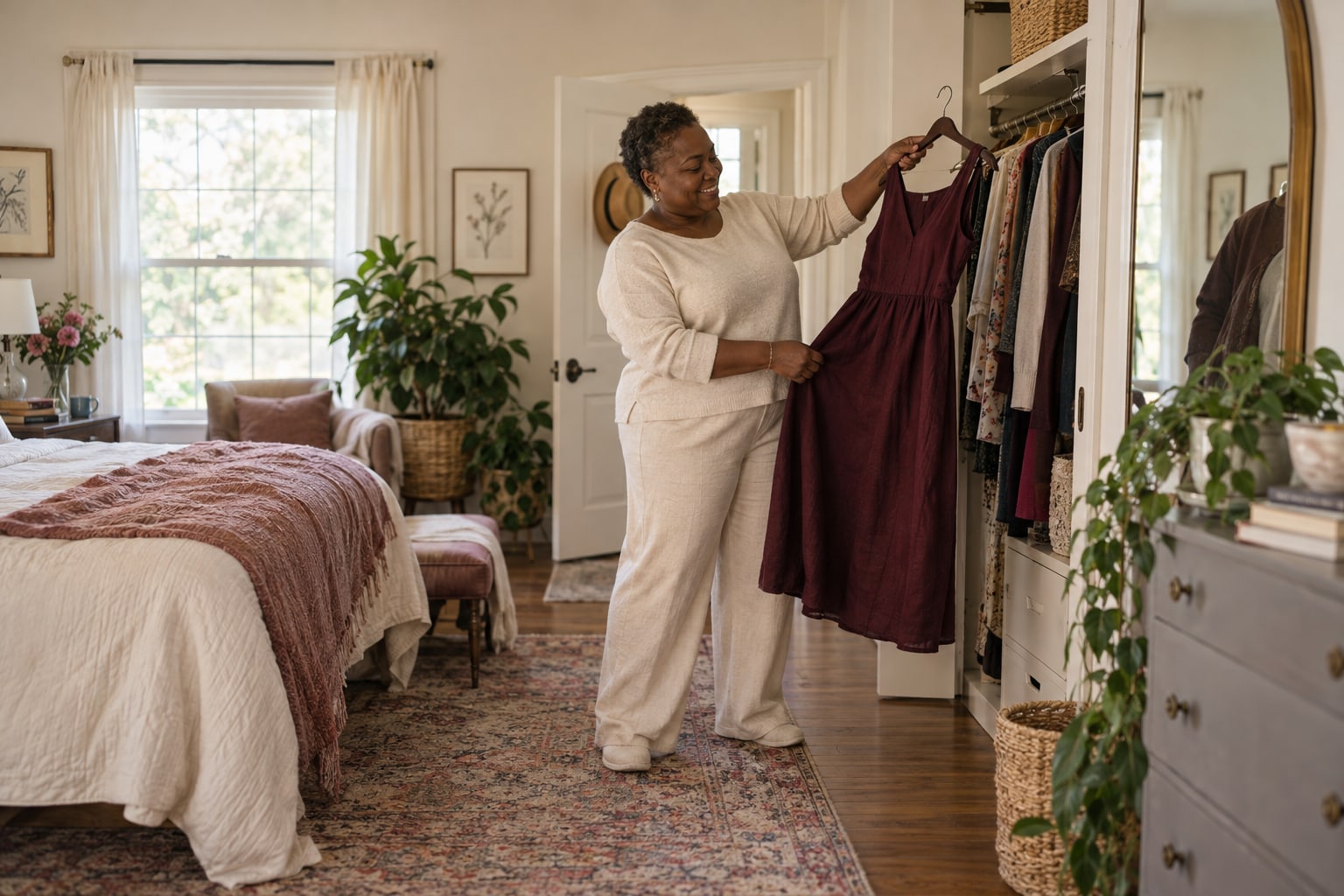
There is a version of the future that keeps getting postponed until your body changes. You will buy the dress then, agree to the beach trip then, appear in photographs then, or let yourself enjoy being desired then. The condition can shift each time you approach it. Your life waits politely while the standard finds another detail to correct.
You do not have to feel delighted with every part of your appearance to participate in your life now. Nor do you need to give up any personal goals you freely choose. The question is whether those goals have become a waiting room between you and ordinary experiences: comfortable clothing, affection, movement you enjoy, celebration, and the chance to be present in your own memories.
This is a reflection on appearance and participation, not medical advice or a prescription for how anybody should feel about her body. Bodies, circumstances, and personal histories differ. You can begin with practical permission rather than a demand to become confident overnight. What would you like to stop postponing, even if your feelings about your appearance remain complicated?
Choose comfort for the body you have today
Clothes that fit your current body can make an ordinary day easier. That is a practical matter, not a statement about whether your body will ever change. You do not have to earn a comfortable waistband, a supportive garment, or an outfit that lets you move without constant adjustment. A piece of clothing that hurts or distracts you is allowed to be the wrong garment.
Consider a hypothetical example: Simone, forty-four, keeps a closet full of dresses she used to wear and avoids invitations because getting dressed feels discouraging. She decides to find one outfit for her current size and preferences. Her budget is limited, so she looks at what can be altered or paired differently before buying anything. The aim is one workable choice, not an expensive reinvention.
She also notices which details matter to her: a fabric that feels pleasant, sleeves she does not need to pull into place, shoes she can walk in. These observations are more useful for choosing an outfit than asking whether she looks like a photograph she saved years ago. She is dressing for an evening she intends to inhabit, including sitting, eating, and laughing.
Identify the experience behind the appearance rule
When you catch yourself saying “after I look different,” ask what you are actually hoping to do. Is it swimming with friends, going on a date, dancing at a wedding, or letting somebody take a picture of you with your family? Name the experience separately from the appearance requirement you have attached to it.
Then examine whether the requirement is necessary for participation. Some activities have practical access, comfort, or safety considerations that deserve attention. Many appearance rules, however, are private conditions rather than actual entry requirements. You might need a swimsuit that feels comfortable and an accessible place to sit; you do not necessarily need a different body before you can enjoy an afternoon near the water.
Simone realizes that she has been treating a friend's birthday dinner as though it includes an appearance examination. Her friend invited her for company. Simone still feels self-conscious, but she can prepare for the event by choosing a comfortable outfit and arranging transportation rather than waiting for a transformation. The evening can contain some discomfort and still be worth attending.
Make room for affection without a presentation
In a respectful adult relationship, you can talk about comfort and preferences without presenting yourself as a problem to be solved. You might prefer a particular pace, kind of touch, or setting. You can ask for reassurance if it helps, and you can decline attention you do not enjoy. Being wanted does not remove your right to choose what feels comfortable.
You also do not need to perform complete confidence to deserve tenderness. “I'm feeling a little self-conscious today; I'd like to take things slowly” offers information without apologizing for your existence. A caring response may involve listening and adjusting. There is no requirement to move past a limit because somebody else says you look beautiful.
If a partner repeatedly mocks your body, pressures you, or makes affection conditional on changing your appearance, that behavior deserves attention in its own right. You do not have to turn their treatment into a personal improvement assignment. The suggestions here concern making room for your experience, including your boundaries, rather than becoming easier for somebody else to evaluate.
Change the conversation you join
Some social conversations treat criticism of one's body as a form of bonding. You may feel expected to contribute a complaint whenever someone else does. You can choose a different response without correcting the whole room. “I'm trying to spend less time picking apart how I look” is a complete position, even if others continue the conversation.
You might redirect toward the experience in front of you: the music, the food, the occasion, or the person you are celebrating. If a friend asks for feedback on an outfit, you can discuss fit, comfort, color, and whether it suits the event without making her body the object that needs alteration. A useful answer helps her choose a garment rather than rank herself.
Simone and a friend agree not to spend the birthday dinner comparing their current appearances with old photographs. They do not make a rule that nobody may ever express insecurity. They simply want the evening to have more subjects. This leaves room for honest feelings while preventing familiar criticism from becoming the automatic center of their time together.
Keep a place for yourself in the record
If you routinely volunteer to take every photograph so that you never appear in one, consider whether you want a different arrangement for certain occasions. You can choose which pictures are kept or shared. You can ask not to be posted publicly. Being part of a private memory does not require surrendering your preferences about how your image is used.
Start with one photograph connected to an experience you value. You do not have to inspect it immediately or decide that you look wonderful. You can let it document that you were there with people you care about. Over time, you may appreciate details beyond appearance: a familiar hand on your shoulder, a ridiculous hat, the table where everyone laughed.
You can also decide that you do not want a photograph on a particular day. The aim is choice, not replacing avoidance with another obligation. Ask whether you are making the decision because privacy or comfort matters to you, or because you believe your present appearance disqualifies you from the memory. The distinction can reveal what you actually want to protect.
Begin with participation, not a new identity
Choose one postponed experience that is realistic for this month. Consider what would make it accessible, comfortable, and enjoyable enough to try. You might need company, a different venue, clothing that fits, a shorter visit, or a clear way to leave. These are practical adjustments to an experience, not admissions that you have failed at confidence.
Afterward, remember the whole event. You may have felt self-conscious during part of it and absorbed in conversation during another part. Both belong in the account. Avoid judging the experience only by the moment you disliked a reflection. Ask whether something else was worth being there for.
Your body is part of the life you are living, not an application you must perfect before being admitted. You can care for it, make your own choices about it, and still let today contain affection and pleasure. The dress, the dinner, the photograph, or the quiet closeness does not have to wait for a version of you that never has an uncertain day.