The phrase “date night” can carry more work than romance. Someone must choose a place, find a reservation, arrange transport, decide what to wear, and perhaps organize care for a child or relative. By the time the evening arrives, it can feel like another event that needs to go well. If that version of couple time is difficult to sustain, the solution may be a smaller, more honest idea of what you want from it.
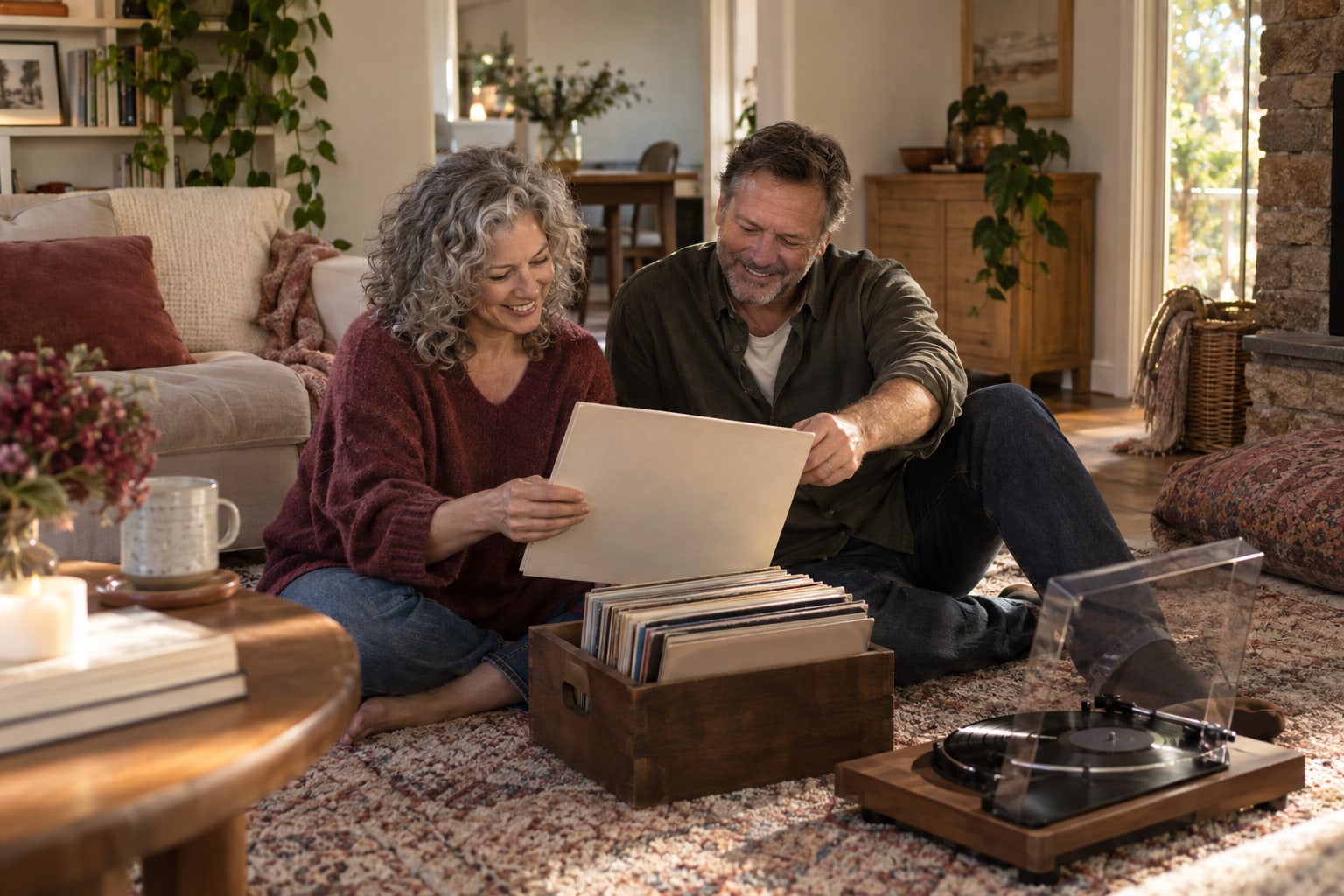
Time together is useful when it gives your relationship something ordinary life has crowded out: play, curiosity, affection, shared attention, or a change of scenery. A meal out can do that. So can a walk to buy peaches or an hour listening to music in the living room. The activity matters less than whether it fits the two people who will actually be there.
Identify what you are missing
Before choosing an activity, complete a practical sentence: “I miss us doing…” Perhaps you miss laughing, trying things, talking without interruption, or sitting near each other without multitasking. Those wishes point toward different plans. A noisy venue may suit a desire for novelty and be a poor setting for the conversation you have been hoping to have.
Ask your partner the same question. You may discover that one person wants excitement while the other wants a little ease. Neither preference has to defeat the other. You can choose different kinds of time on different occasions, or find a modest combination: an unfamiliar café followed by a quiet walk.
Avoid treating an elaborate outing as automatic proof of care. Planning effort can be loving, but a carefully booked evening may still miss the recipient's actual wish. “What would feel good this week?” is sometimes a more romantic question than surprising someone with a demanding schedule they do not have the energy to enjoy.
Match the plan to your real capacity
Consider time, money, energy, transport, accessibility, and any care responsibilities before committing. These are design conditions, not embarrassing limitations. A plan that fits them can be more enjoyable because neither person spends the evening worrying about what it costs or how long it will take to get home.
In a hypothetical example, a couple keeps canceling Thursday dinners because one partner's shift often runs late. They move their shared time to Sunday breakfast and occasionally add an evening outing when the week allows. The change does not mean they care less about romance. They have chosen a time their lives can support.
Set a comfortable spending range if money is relevant. Do it before somebody makes a reservation, so the conversation does not become a criticism of the plan after work has gone into it. “Let us choose something simple this week” can be an invitation to creativity rather than a disappointed concession.
Share the planning without draining the pleasure
One person can become the permanent curator of a couple's social life. They suggest, book, remind, and rescue the plan if something changes. If that pattern feels tiring, divide the whole task. Taking a turn means choosing something suitable, checking the details, and handling the arrangements, not asking the other person to produce a menu of options.
Give each other enough guidance to plan successfully. Share a few things you enjoy, a few you do not, and the practical limits for the week. Then allow the planner some freedom. A partner cannot experience ownership if every choice is corrected until it becomes the other person's plan.
Alternating turns is one option, but you could also keep a short shared list and choose together. The fair arrangement is the one that distributes responsibility in a way you both accept. If one person enjoys planning and the other handles a different meaningful task, that can work too, provided the agreement remains voluntary and visible.
Create a beginning and an end
An at-home evening can dissolve into ordinary chores unless it has a recognizable start. Put away the work materials, finish the essential task, and say, “I am ready to hang out.” You do not need candles or special clothes unless you enjoy them. A small transition tells both people that this time has a different purpose.
Agree on what can interrupt it. Perhaps you need to remain reachable for a particular person, or someone expects an urgent work update. Name that in advance. Otherwise, set aside the distractions that usually consume your overlap. The point is not to create a perfectly sealed room; it is to stop unrelated activity from taking over by default.
An ending can help too. If one person expects a long evening and the other is counting on an early night, unspoken expectations may spoil a pleasant hour. “Let us watch one episode and then go to bed” gives the time a shape both can choose. A modest plan can be complete without expanding into everything.
Do not require the evening to repair the entire week
Protected time can reveal distance as well as closeness. You may sit down and realize that both of you are tired, distracted, or still irritated about something unresolved. That does not mean the plan failed. It means you have arrived as yourselves rather than as the cheerful couple the reservation seemed to require.
If a conflict needs attention, decide together whether to address it now or give it another time. “I am still upset about yesterday. I would like to talk tomorrow morning, and tonight I can enjoy a quiet walk” may be honest. If you cannot comfortably set it aside, choose a smaller plan instead of forcing a festive performance.
Likewise, do not make physical affection or sexual activity an expected result of a successful date. Enjoying time together does not create an obligation to continue in a particular way. Let closeness develop through invitations and willing responses. Pressure can turn an otherwise pleasant evening into something one person starts avoiding.
Let ordinary interests become shared material
You do not have to invent a new hobby as a couple. Visit a place one of you already likes and let that person show the other what they notice. Cook a familiar dish using a different recipe. Browse a bookstore and each choose a passage to share. The activity can supply conversation without requiring a list of profound questions.
You can also make room for separate tastes within the same outing. At a market, each person might choose one stop. At home, you might trade songs from different periods of your lives. Curiosity does not require identical preferences. It asks you to be interested in why the other person enjoys something.
If an activity falls flat, resist turning it into a referendum on compatibility. A disappointing class or awkward restaurant can remain one disappointing plan. Notice what did work: the drive, the joke afterward, the chance to get outside. Then choose differently next time with the information you have gained.
You can also keep a small backup plan for cancellations: a favorite takeout meal, a familiar walking route, or a game you both enjoy. A backup removes the need to invent an entire replacement evening while disappointed. It should feel like an available option, with room for either person to prefer rest instead.
Keep the part you want to repeat
Afterward, ask a light, useful question: “What would you like to do again?” This is easier to answer than “Was that romantic enough?” Maybe you loved the walk but not the late dinner. Maybe cooking together worked until cleanup became unclear. Adjust the specific part that needs changing.
Couple time becomes sustainable when it belongs to your actual relationship. It can be brief, affordable, quiet, playful, occasional, or regular. What matters is that both people have a hand in making it happen and a real chance to enjoy it. The best plan is often one that leaves you thinking, with very little drama, that you would like to do that again.