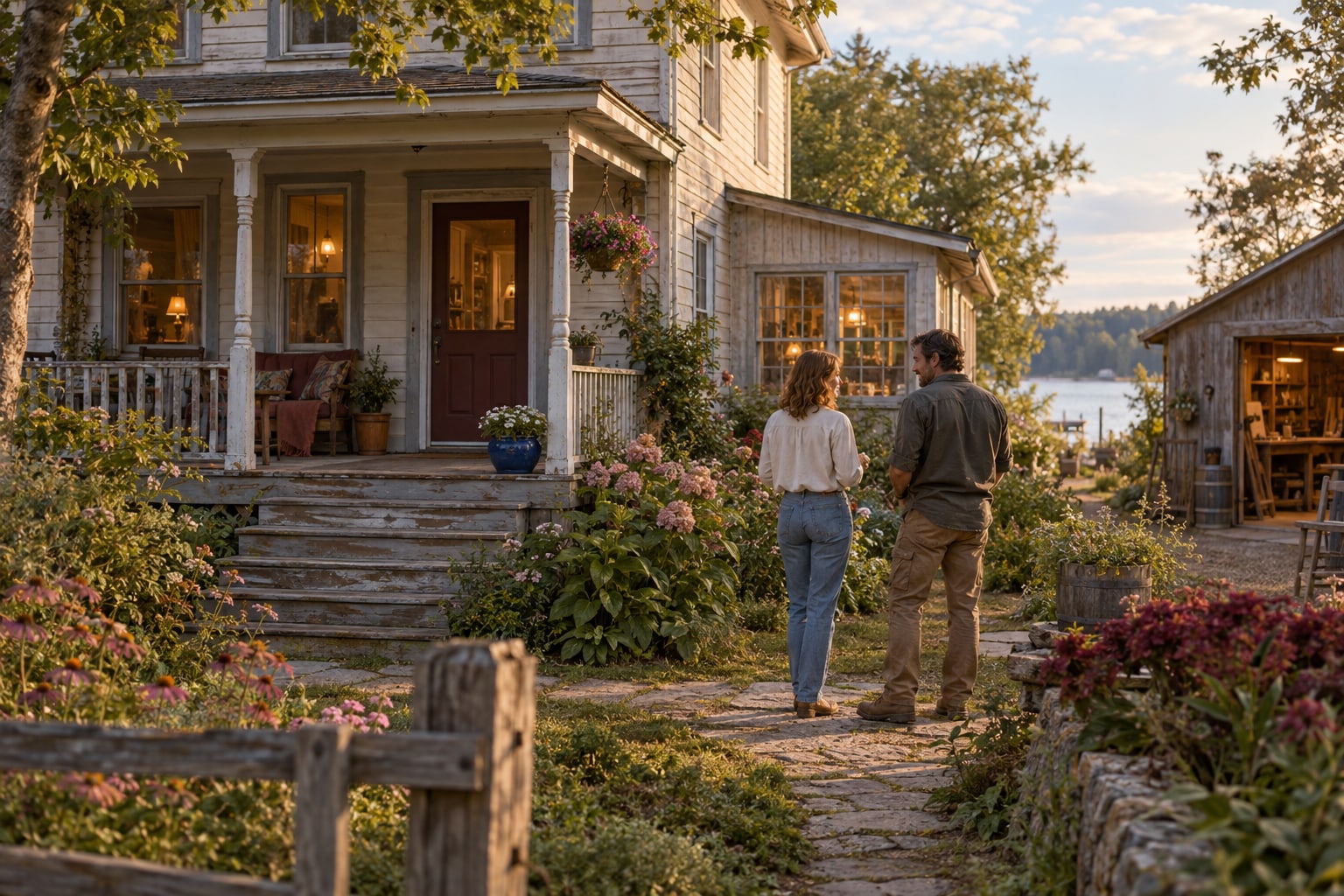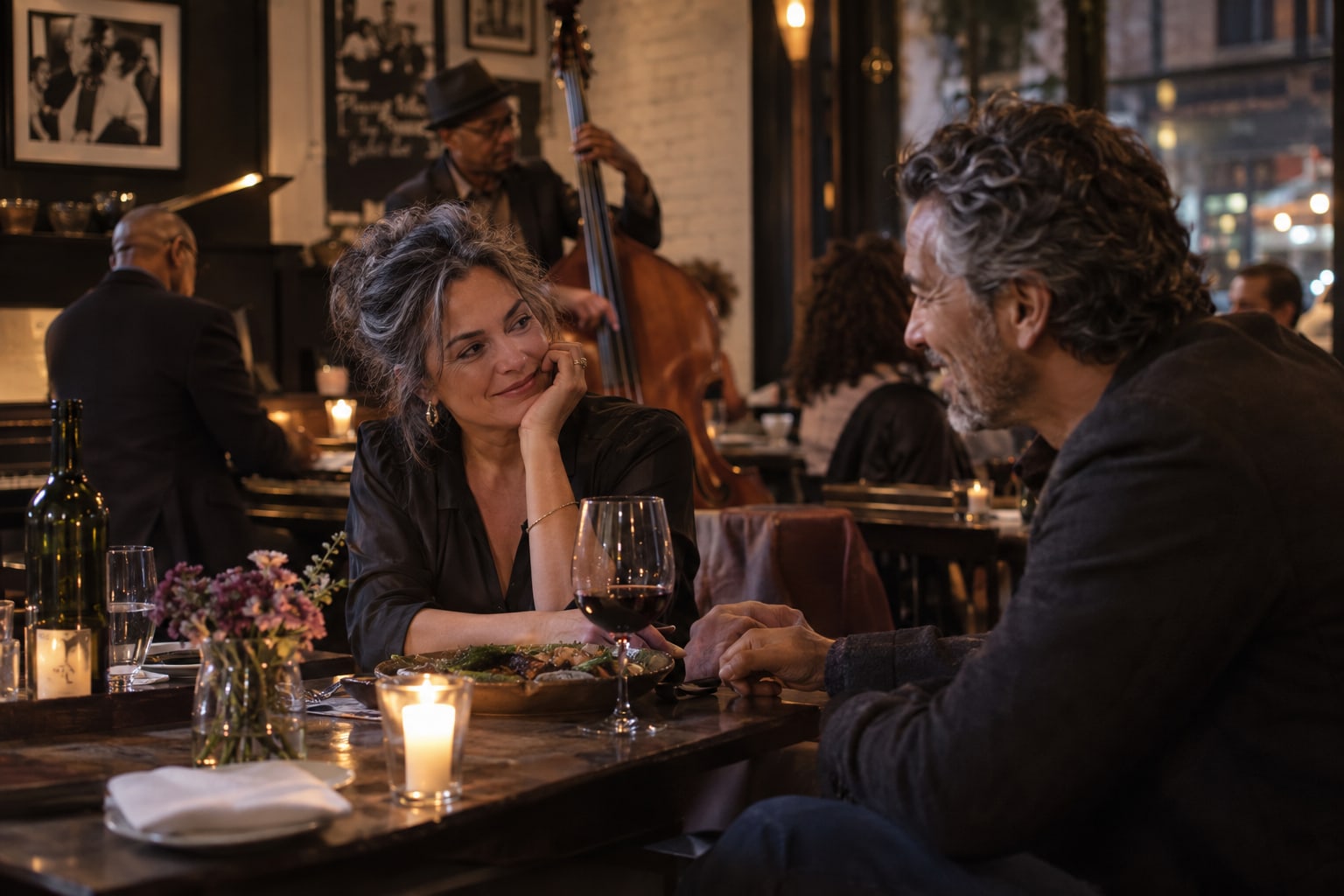
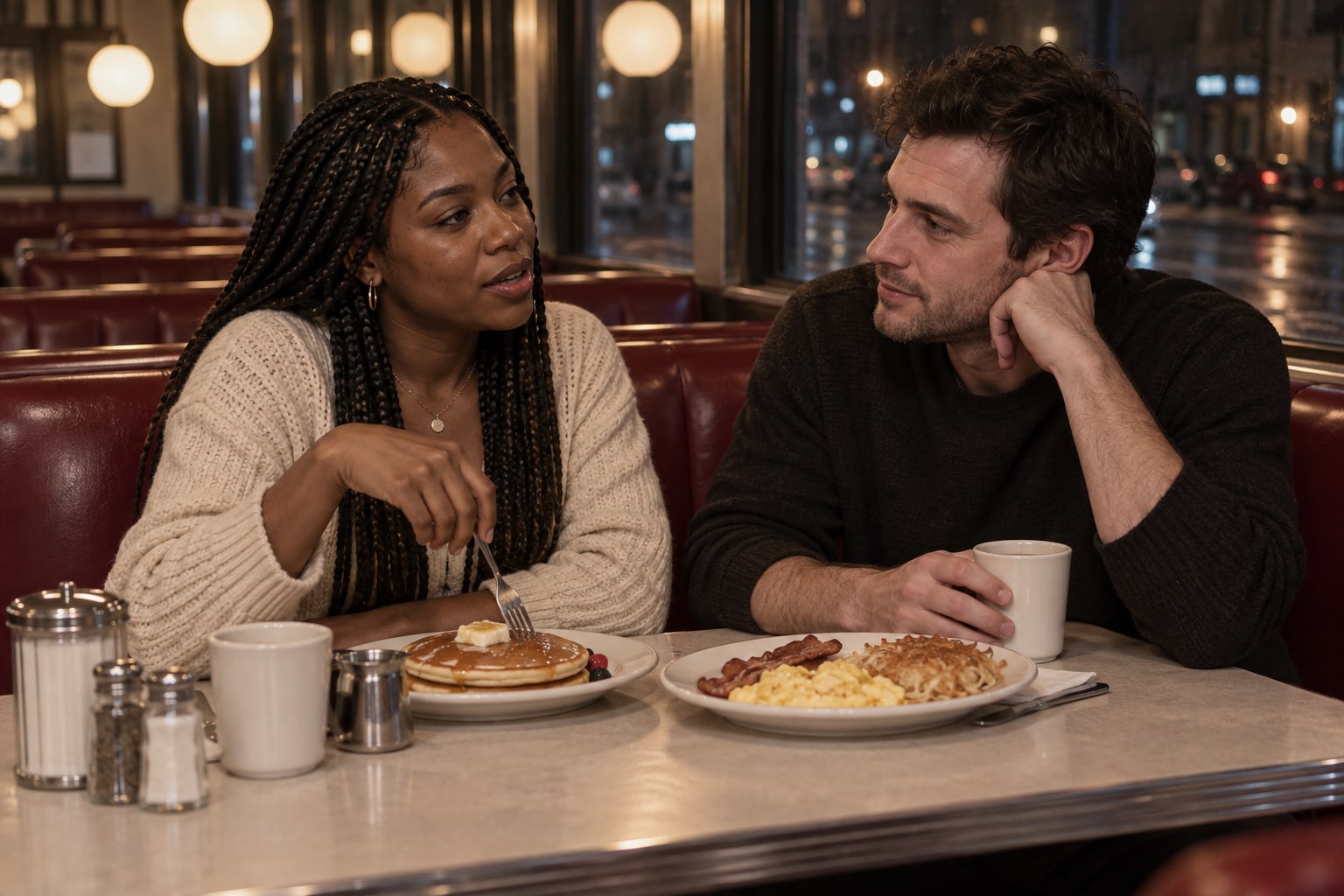
The diner’s neon sign had lost its second E, which made the place appear to promise DINR with unusual confidence.
Maya arrived at one twenty-eight, carrying a notebook she had promised herself not to open. Lucas was already in the booth beneath a framed photograph of a man holding a very large fish. He stood when he saw her.
“I can get up for myself,” she said, smiling.
“I was getting up for me. Better view.”
She stopped half a step short of the table. “You can’t open with that.”
“First-date rules weren’t that specific.”
His confidence felt pleasantly different from presumption. He gave her room to choose the opposite seat. She chose it, took off her coat, and put the notebook deep in her bag.
Their waitress was a woman with silver glasses who addressed Lucas as honey and Maya as sweetheart, distributing affection with brisk institutional fairness. They ordered eggs, toast, and coffee. Lucas added pancakes for the table.
“A bold alliance,” Maya said.
“I believe we have common interests.”
The diner windows reflected an imperfect second room over the dark street. Two men in fluorescent jackets ate silently at the counter. Somewhere in the kitchen, a cook sang one line of a song, abandoned it, and started another.
“You’re listening,” Lucas said.
“I’m always listening.”
“I don’t mean you’re not here.”
She relaxed. “Most people mean that.”
“I notice where the exits are. It doesn’t mean I’m planning an escape.”
“Are you?”
“I haven’t met the pancakes yet.”
She told him about growing up on the South Side with a mother who worked in school administration and a father who could identify any song from its opening bass line. At fourteen she had recorded her grandmother describing a winter train journey, then added dramatic wind sounds from a free website.
“My grandmother said, ‘Baby, I was cold, not crossing Antarctica.’ It was my first editorial note.”
“Did you take it?”
“After a dignified period of resentment.”
He told her he had grown up outside the city and moved in for nursing school. He liked the practical certainty of the job, the fact that doing something useful mattered more than seeming impressive. Then, with a rueful look, he admitted that seeming useful could become its own form of showing off.
“Explain.”
“Sometimes I offer to fix something when the person just wanted company.”
“A man with insight. Do they know you’re out here unsupervised?”
“My sister maintains a file.”
Their food arrived. Lucas slid the pancakes between them and gave her the first choice of edges. Maya, who had strong views about crisp pancake edges, considered this an encouraging development.
They discussed terrible apartments, good winter coats, and the particular humiliation of waving back at someone who was greeting the person behind you. He confessed to having once spent four months mispronouncing a coworker’s dog’s name. She admitted she had twice attended an event because she confused the invitation with a different, better event.
“Both times I stayed,” she said. “There was catering.”
“Principles.”
“I have several.”
At two fifteen, her phone vibrated. Evan. She saw the beginning of the message: Audrey asked whether we can move faster—
She turned the phone facedown.
Lucas watched the movement without comment.
“That’s not heroic restraint,” she said. “He routinely has thoughts at two in the morning that could improve by waiting until nine.”
“Mine mostly involve toast.”
“Better thoughts.”
She wanted to tell him about the request to make him a recurring character. She did not want the first date to become a discussion of why her industry had already tried to metabolize him. The difference between privacy and withholding sat uncomfortably beside her coffee.
“An honesty item,” she said.
He put down his fork. “Okay.”
“I mentioned meeting you to my editor. He suggested a recurring nurse character for the project. I said no. I should have kept your name out of a work conversation.”
Lucas’s expression changed, not dramatically. It simply became less open.
“What did you tell him?”
“That we met while I was recording. Your first name and what you do. Nothing about your family.”
“And you said no?”
“Immediately.”
He looked at the window for a moment. “Thank you for telling me.”
“I’m sorry.”
“I believe you.” He brought his attention back to her. “I don’t want my work in this. Or people I know from work.”
“It won’t be.”
“And I don’t want to worry that something I say on a date might become a good line.”
The request landed where it should. “Then here’s a rule. Us is not material. Ever, unless we both specifically decide otherwise. No implied permission.”
He nodded, and after a second picked up his fork. “That’s a good rule.”
She had expected either exaggerated reassurance or a punishment that lasted the rest of the night. His plain acceptance made her own promise feel heavier, in a useful way.
They stayed another forty minutes.
When the check arrived, she said, “Split?”
“I asked you out. I’d like to pay.”
“And I invented the six-date program. Administration isn’t free.”
“You get the next one.”
It was such an ordinary assumption, delivered without ceremony, that she could not stop smiling.
Outside, a small rain had polished the street. Maya opened her umbrella. Lucas stepped beneath it when she lifted the edge, though one shoulder remained outside its protection.
“This was a good first date,” she said.
“Even with the fish watching?”
“Especially. It kept us accountable.”
They walked toward her parked car. Her hand held the umbrella handle at chest height. His was close enough that their knuckles brushed twice, each time leaving her absurdly aware of having hands at all.
At the car, he stopped. The rain made a quiet drum over them.
“Maya.”
She looked up.
“I want to kiss you.”
“I was beginning to think you’d make me submit a request.”
His smile came slowly. “Is that a yes?”
“Very much.”
He took the umbrella from her, freeing her hand. Then he set his other hand lightly at her waist and kissed her with an assurance that made the noisy street seem far away. She caught the front of his jacket and stepped closer. There was nothing tentative about what she wanted, and when he paused, she kissed him again.
The umbrella tilted. Rain struck both their shoulders.
“Poor infrastructure management,” she murmured.
“I got distracted.”
He waited while she unlocked the car, then handed back the umbrella and stood clear of the door.
“Second date,” she said. “Sunday. You said you have the evening.”
“I do.”
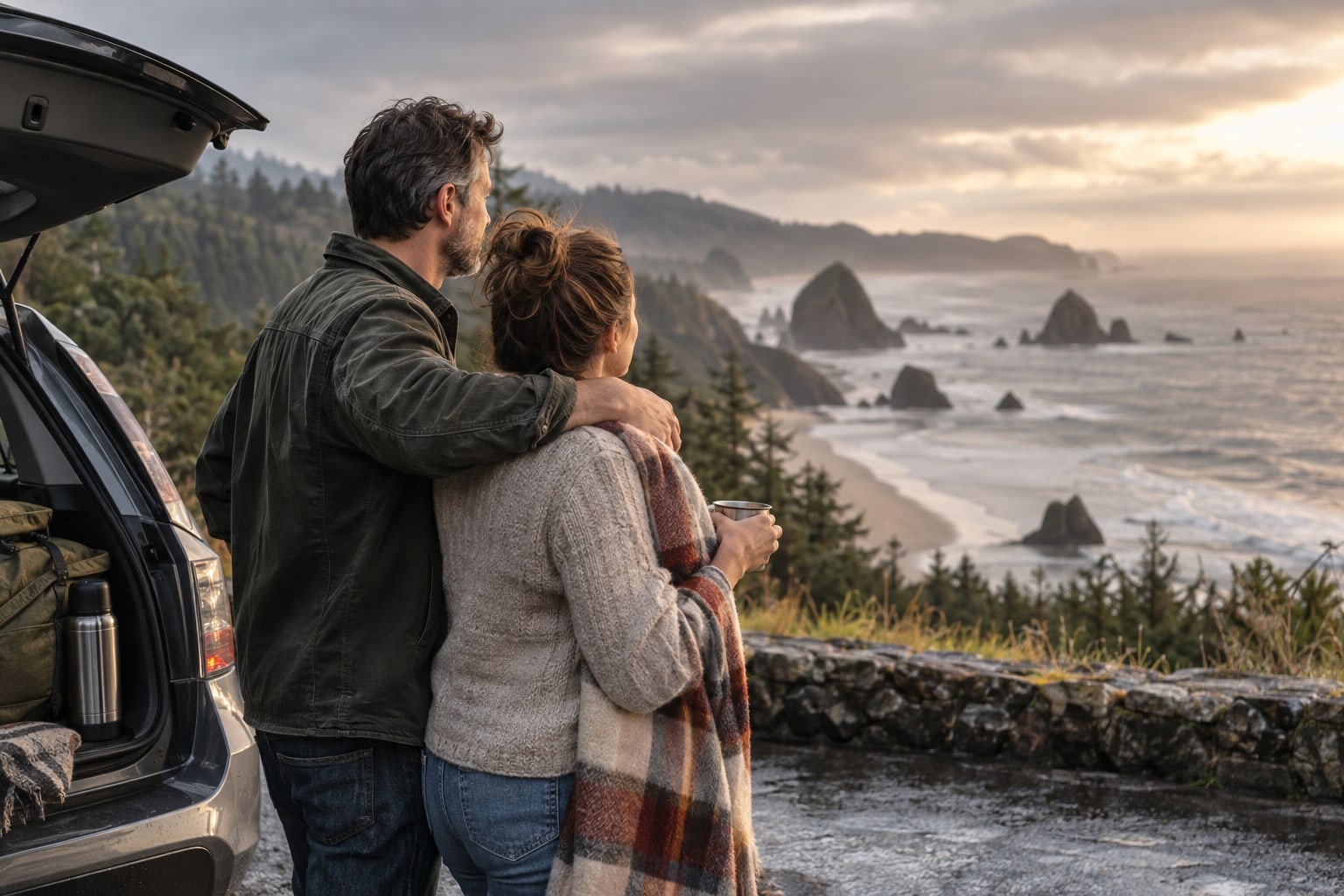
“The lake. I’ll feed you something that didn’t come with a fish portrait.”
“High standards already.”
Driving home, Maya left the radio off. She wanted to keep the night in its own shape.
At a red light her phone lit up in its dashboard holder. A text from Lucas appeared beneath the silent navigation screen.
One honest thing I didn’t say: I almost kept walking past you that first night. I’m glad I didn’t.
Maya waited until she was parked to answer.
So am I.