
Eli read the note about his father twice, then looked at Nora across the kitchen table.
“I don’t know what door she means.”
“I wasn’t assuming you did.”
“I know. I’m telling you because I can already feel myself trying to guess before I ask him.”
The admission mattered more to Nora than certainty would have. Their first kiss was still close enough that she could recall it at inconvenient moments, but she did not want tenderness to make ordinary questions difficult.
“Would he mind my coming with you?” she asked.
“I’ll ask.”
Daniel Mercer’s answer, relayed an hour later, was that he would welcome anyone who remembered to bring a decent newspaper. Eli said this was not a criticism of Harbor House’s activities program, though his father had several of those available on request.
They visited Sunday afternoon. Harbor House stood near the lake, with broad windows and a garden where residents had strong opinions about the tomato plants. Daniel occupied a bright apartment filled with books, half-finished sketches, and a model sailboat whose rigging remained in a labeled box.
He was seventy-four, with Eli’s eyes and none of Eli’s restraint about expressing an opinion.
“June’s niece,” he said. “You drew a very unflattering picture of me once.”
Nora laughed. “I was eleven.”
“I was wearing shorts. You had material.”
His hands trembled when he took the newspaper. Eli offered to pour the coffee, and Daniel waved him toward the kitchenette without apology. Nora liked that neither of them pretended the assistance was invisible.
They began with ordinary news. A neighbor had acquired a dog too large for his car. The library’s elevator had been repaired. June’s old house was getting its back wall fixed.
Then Nora showed Daniel the copied note.
He read it, frowned, and tapped the page with one finger. “The outside door. Green one. There was a sign above it.”
“Juniper Print Room?”
“Under that. Bennett and Shaw. Celia painted it herself.”
Eli set down the coffee pot. “What happened to it?”
Daniel’s mouth tightened. “Storm damaged the little canopy. I replaced the trim. June asked me to take the sign down while I was up there. Said Celia had moved and she’d put something current up later.”
“Did she?” Nora asked.
“You’ve seen it.”
He looked at the window. The room remained quiet long enough for the answer to become more than a fact about wood.
“Celia asked me where I’d put it,” he continued. “I told her the loft above the shop. She said she’d fetch it next visit. I don’t know if she did.”
“Why the note?”
“Maybe she wanted me to bring it down. Maybe she wanted someone to remember there had been two names. I should have asked.”
Nora felt the old desire to make a painful conversation easier. She resisted it.
“Thank you for telling us.”
Daniel nodded. “Your aunt was my friend. That doesn’t improve that particular afternoon.”
Eli looked at his father with an expression Nora could not fully read. Affection remained, but it had made room for disappointment. She recognized the difficult work of allowing someone you loved to be a whole person.
They put the papers away. Daniel asked about Nora’s drawings, and she showed him the hotel sketches on her phone. He had once drawn boats in the margins of hardware orders. Now a pencil was difficult to control, which frustrated him more than he liked to admit.
“I can still see the line,” he said. “Hand just takes the scenic route.”
Nora thought of Mae’s work but did not make a referral out of a Sunday visit. Instead, she asked whether he ever used thick charcoal.
“Less negotiation with the fingers,” she said. “Messier, though.”
“Mess is a department in which I remain qualified.”
She promised to bring some next time if he wanted. He said he did.
On the way out, Eli paused at the desk to confirm a transport arrangement for his father’s medical appointment. There was a scheduling problem. Nora watched his shoulders settle into a familiar, purposeful line.
“I can take him,” he said.
Then he glanced at the calendar and stopped. “Actually, that morning conflicts with a client inspection. Let me call my brother before we move anything.”
Outside, he stood beside the truck and made the call. Owen answered after a few rings. The conversation was brief, practical, and less dramatic than Eli appeared to expect. His brother could take their father. He had vacation time and had meant to visit anyway.
Eli put the phone away.
“You look surprised,” Nora said.
“I am. I’ve spent three days solving that appointment in my head.”
“Did Owen know there was a problem?”
“No.”
They looked at each other. Eli gave a rueful smile. “Permission to want something inconvenient.”
“Sometimes you have to tell the other departments.”
They drove back through town with the windows open. At the public landing, Eli asked whether she had time to stop. Nora did.
The lake was rougher than on their first walk. Wind pushed little waves against the pilings. They stood at the railing, their sleeves brushing.
“I’m sorry about the sign,” he said.
“You didn’t take it down.”
“No. But I wanted Dad to have a better answer.”
“I wanted June to have written a better letter.”
He nodded, looking across the water. “We don’t get to improve the past by liking people.”
“We can do a better job with the room.”
He turned toward her. “You can decide what doing better means. You don’t have to repay every old mistake with your entire life.”
The words loosened something she had not admitted was tightening. Since Mae’s visit, Nora had begun treating the house as a test of whether she deserved her aunt’s love. Eli seemed to see the distinction she was losing.
“Will you remind me?” she asked.
“If you want me to.”
She reached for his hand. It was the first time they had held hands without an accidental brush or a task between them. His fingers closed around hers, warm against the wind.
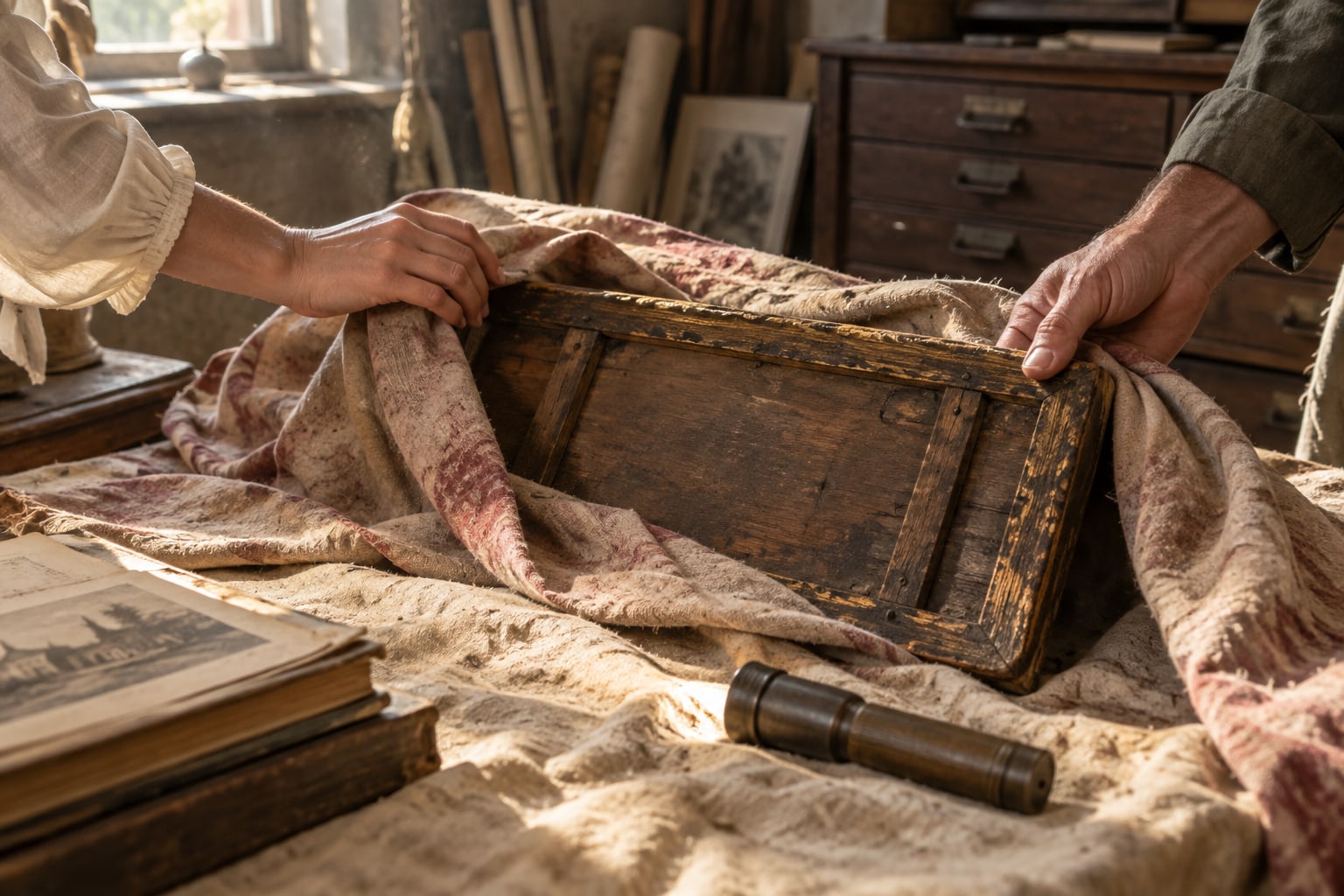
Back at Juniper Lane, Eli fetched a flashlight. They could inspect the loft from the safe access hatch without entering the damaged section. Nora held the light while he opened the hatch and looked inside.
“There’s a wrapped board,” he said. “Long enough to be a sign.”
He brought it down carefully and laid it on a dust sheet. Together they untied the cloth.
Gold letters emerged beneath the dust: BENNETT & SHAW. At the bottom, nearly hidden by the frame, Celia had painted a second line.
Nora leaned closer to read it.
For every woman who needs a room of her own, and sometimes a room with company.