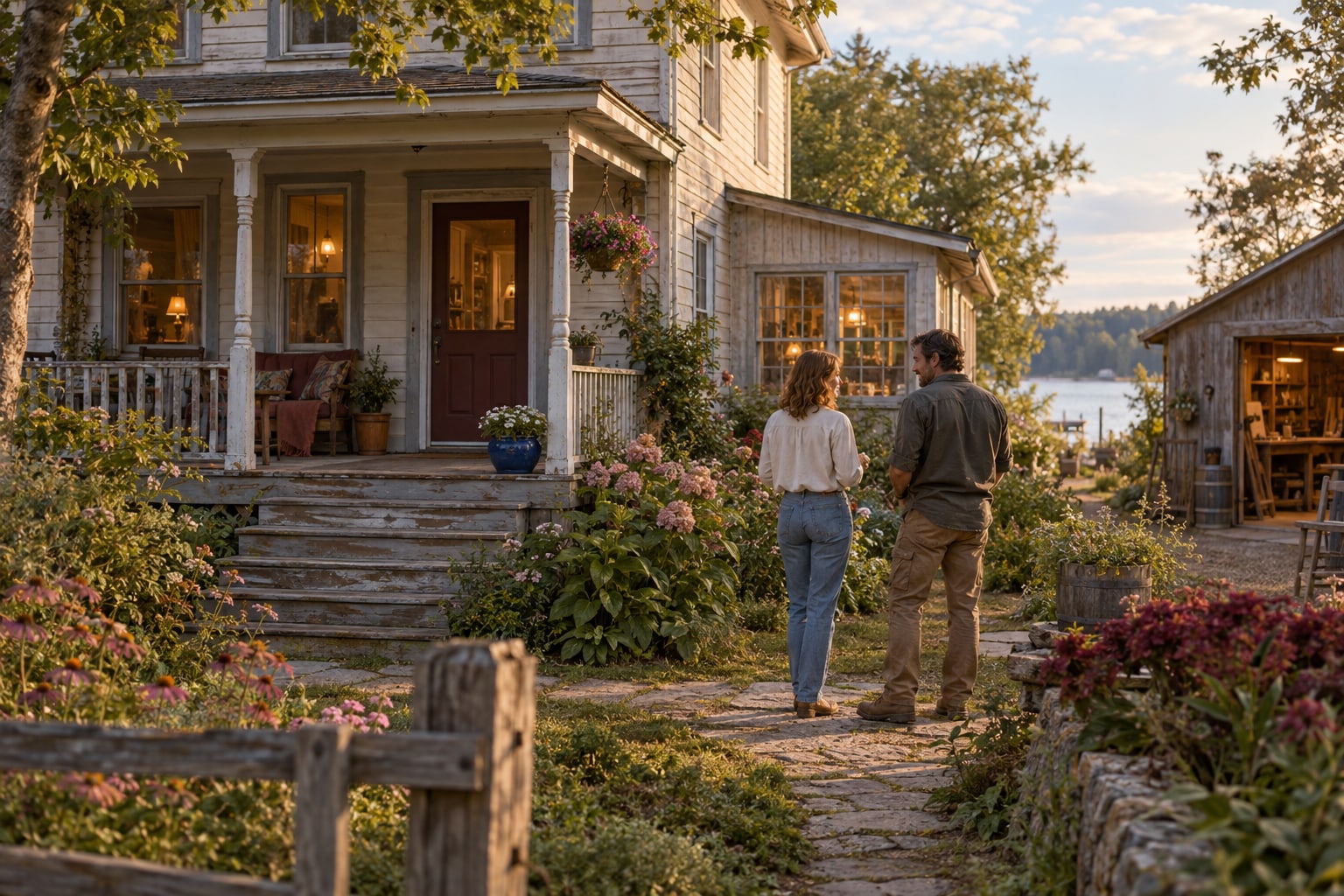
By Friday, Adam had become very good at asking where things belonged. A crate of sign brackets. Two bags of gravel. Himself.
Lena found the last question hardest. He never said it aloud. He stopped at doorways, stayed at the far end of meetings, and offered practical information in the neutral tone of a man reporting weather. She had asked for room. He was giving it. She refused to resent him for obeying an instruction she meant.
The first trouble concerned a maple tree.
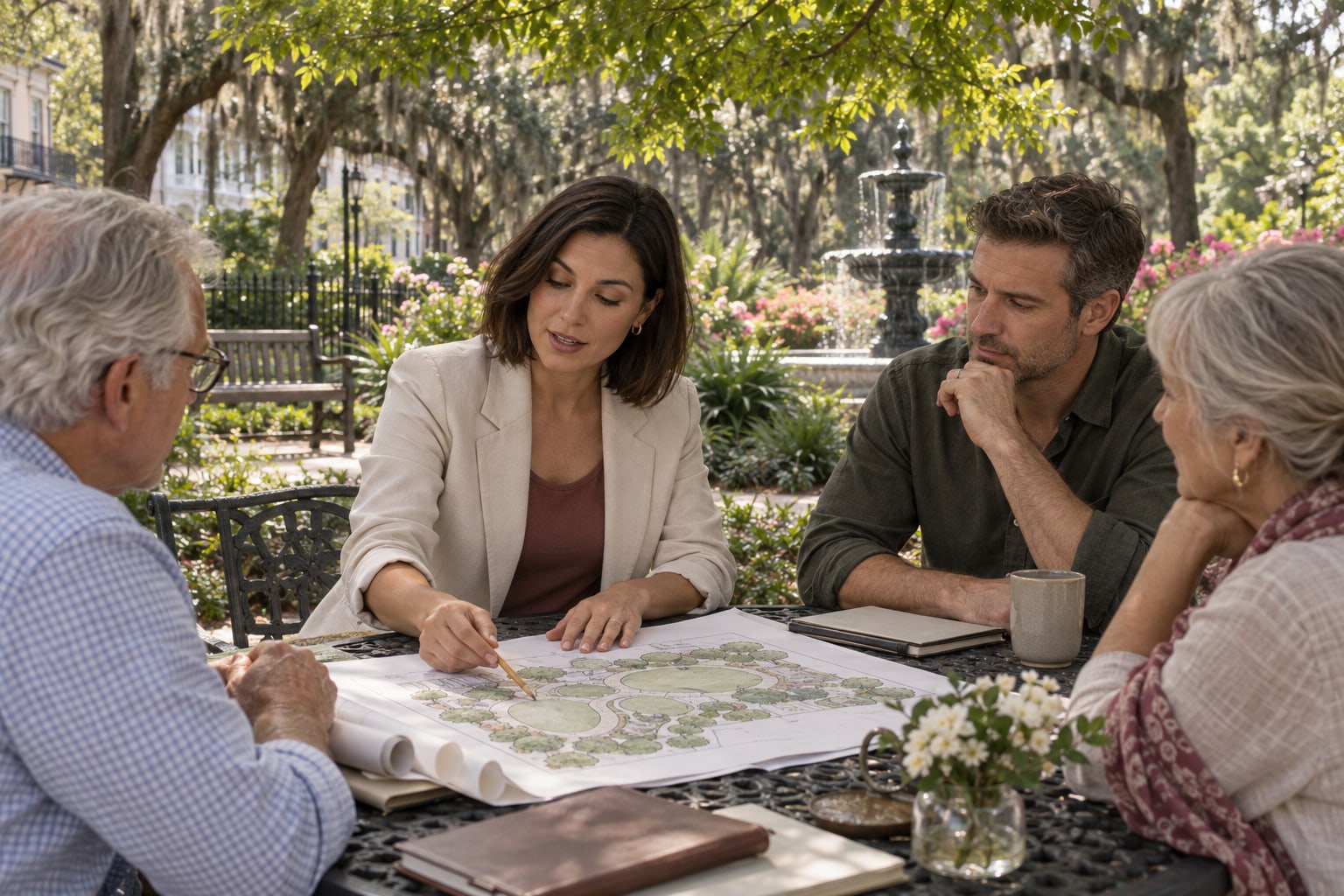
Evelyn wanted the donor welcome panel beneath its shade. Lena wanted Mrs. Bell's recorded interview there, where visitors could sit and hear it without competing with the fountain. An anniversary committee member named Walter suggested combining the two.
“Mrs. Bell can introduce the sponsors,” he said.
“Mrs. Bell is telling us about losing her husband,” Lena replied. “She isn't available as an opening announcement.”
Walter smiled as though she had made an amusing professional distinction. “Surely we can all be flexible.”
Lena felt the familiar effort of keeping her voice calm while somebody mistook calmness for negotiation. Adam shifted in his chair. She could almost hear the helpful sentence preparing itself.
Then he looked at her and remained quiet.
“The welcome panel belongs at the entrance,” she said. “It will be visible to every visitor. The interview belongs where listening is possible. Those are two different jobs.”
She turned the site drawing toward Walter and traced the route with her pencil. Three minutes later, the welcome panel had a new location, the interview had its bench, and nobody had needed to tell her to soften her position.
After the meeting, Evelyn came back for her glasses and stopped beside Lena's drawing. “I let him turn the conversation into a negotiation when you'd already answered,” she said. “I'll handle that better at the next meeting.”
Lena appreciated the plainness of it. “Thank you. People can disagree with me. I need them to disagree with the actual idea.”
“Understood.” Evelyn picked up her glasses. “And Mrs. Bell has already told me she wants the good headphones. Apparently the bad ones pinch.”
Lena smiled. “Mrs. Bell gets the good headphones.”
After Evelyn left, Adam stayed behind to roll the drawings.
“You looked like you had something to say,” Lena observed.
“I did.”
“About the panel?”
“About Walter calling your answer inflexible.”
“Why didn't you?”
He secured the roll with an elastic band. “You were still speaking.”
She glanced at him. “That's a remarkably uncommon thing for people to notice.”
“I'm trying to notice sooner.”
It could have sounded rehearsed. Instead, he seemed almost annoyed with himself that the lesson had needed learning.
At three, Lena's supervisor called from Chicago. Daniel had impeccable manners and a talent for turning his preferences into shared assumptions.
“How's the little garden?” he asked.
“Thirty years of neighborhood history across nearly an acre.”
“Of course. Listen, leadership wants your thoughts on the associate director role.”
She stepped into the empty conservatory. The job came with a larger salary, a smaller drafting table, and more meetings in which she would help others make things she wanted to make herself.
“I haven't decided whether to apply.”
“That's nerves talking.”
“No. It's a decision I haven't made.”
There was a pause. “We should discuss it when you're home.”
After they hung up, she stood beside her sample materials until the resentment sorted itself into something she could use. She wanted people to stop naming her thoughts before she finished having them.
Marisol arrived with printed photographs and a paper bag containing two cinnamon rolls.
“One is lunch,” she said. “The other is an objection to lunch.”
Lena told her about Daniel. Then she told her about Seattle.
Marisol stopped unwrapping her roll. “How long have you been considering this?”
“Eight months.”
“And how long have you been considering telling me?”
“Slightly less.”
“Lena.”
“I know.”
Marisol sat down. “You don't have to bring me finished decisions so I won't worry about you.”
Lena looked at her hands. “I didn't want to sound ungrateful for a good job.”
“You can appreciate a room and still need a window.”
“That's going on a tea towel.”
“Then credit me.”
They laughed. Marisol asked to see the application, and Lena showed her the proposal for a traveling exhibition built around gardens and the people whose unpaid work sustained them. She had sketches, a reading list, and an empty page where the artist statement belonged.
“This is not an idea you had yesterday,” Marisol said.
“No.”
“Then stop treating it like an impulsive purchase.”
After Marisol left, Lena took her laptop outside and wrote beneath the magnolia. At the far end of the garden, Adam and Hazel were testing the new gate hinge. It opened smoothly on the third attempt. Hazel applauded with exaggerated solemnity.
Adam saw Lena watching. He pointed to the gate, a small invitation to inspect the result.
She walked over. “It loses some historical authenticity.”
“We kept the bad hinge in the archive,” Hazel said. “Future generations deserve an explanation.”
Lena pushed the gate. It moved without resistance. She felt an absurd tenderness toward it, then toward both people standing beside it, which was inconvenient in different ways.
Hazel went to load the truck. Adam waited with his hand on the latch.
“The repaired things shouldn't make the old things disappear,” Lena said.
His expression sobered. “I don't expect that.”
“I mean the exhibition.”
“All right.”
She looked at him. “I don't only mean the exhibition.”
“I know.”
For the first time that week, silence did not seem to demand anything from her.
At home, Ruth called about the boxes in the old clock shop. A buyer wanted the building cleared by the end of the month. Lena had known about the sale. She had agreed to it. Hearing a deadline still felt like somebody drawing a line through a place on a map.
“I can hire someone for the shelving,” Ruth said. “But you should choose what you want first.”
“Saturday. I'll come Saturday.”
After the call, Lena opened a new message to Adam, then stopped. He knew the shop. He knew which cabinet her father had built and why the back door stuck in summer. That knowledge felt useful and dangerous.
She messaged Marisol instead. Her friend replied that she had a market all day but could come Sunday.
Lena looked across the room at her father's photograph. Then she wrote to Adam.
Would you help me move a cabinet on Saturday? This is a specific request, not an answer about anything else.
His reply arrived a minute later.
Yes. Tell me what time, and whether you want company afterward or just the cabinet moved.
For the first time in years, somebody had left the shape of her need in her own hands.