Lena did not answer Adam's sentence. She answered the drainage question, approved the revised path, and spent eleven minutes choosing an ending that would not suggest either warmth or hostility. Regards seemed like a courtroom. Thanks seemed like a door left ajar. In the end, she signed her name.
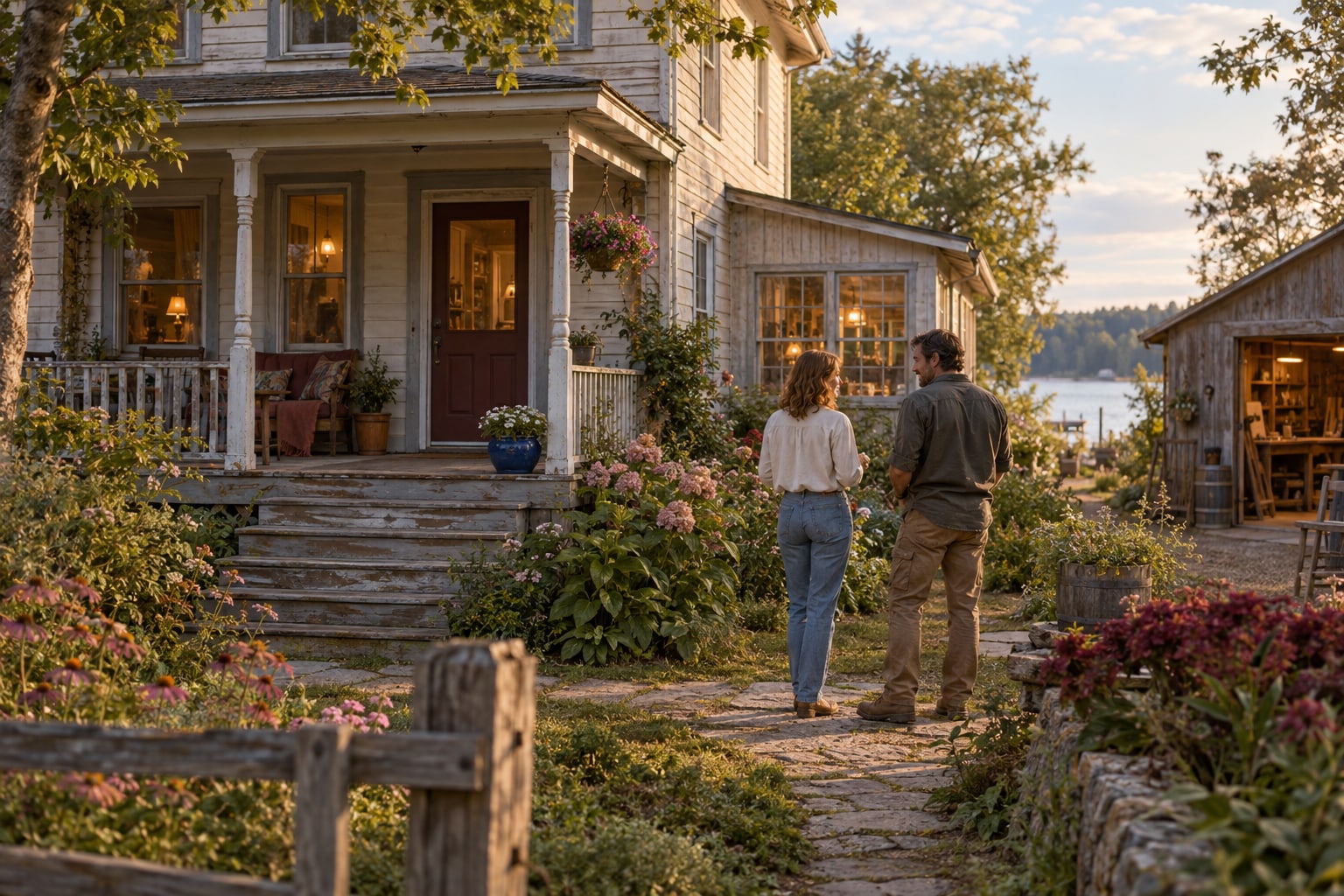
The next morning, she arrived at the garden carrying coffee and the portable scanner Marisol had lent her. Adam was kneeling beside a planting bed with a younger woman in paint-spattered boots. He stood when he saw Lena, then seemed to reconsider approaching.
The woman approached instead. “Hazel Freeman. I manage Adam's projects and prevent his handwriting from becoming a public danger.”
“Lena Ortiz. I turn other people's handwriting into exhibitions.”
“Excellent. We have substantial material.”
Adam looked between them. “I can hear you.”
“That's part of the process,” Hazel said.
Lena liked her immediately. She liked Adam's smile at the exchange less conveniently. It was quieter than the smile she remembered, less interested in being noticed. He took a pencil from behind his ear and marked the position Hazel indicated.
In the conservatory, twelve archive boxes waited beneath a table. Lena opened the first and found photographs labeled in three distinct hands, receipts for fertilizer, a faded petition, and a child's drawing of a fountain that resembled an exploding wedding cake.
This was why she loved her work. History did not arrive sorted into meaningful moments. It arrived with a receipt for twenty-seven dollars and somebody's lunch notes. You had to pay attention long enough for a life to emerge.
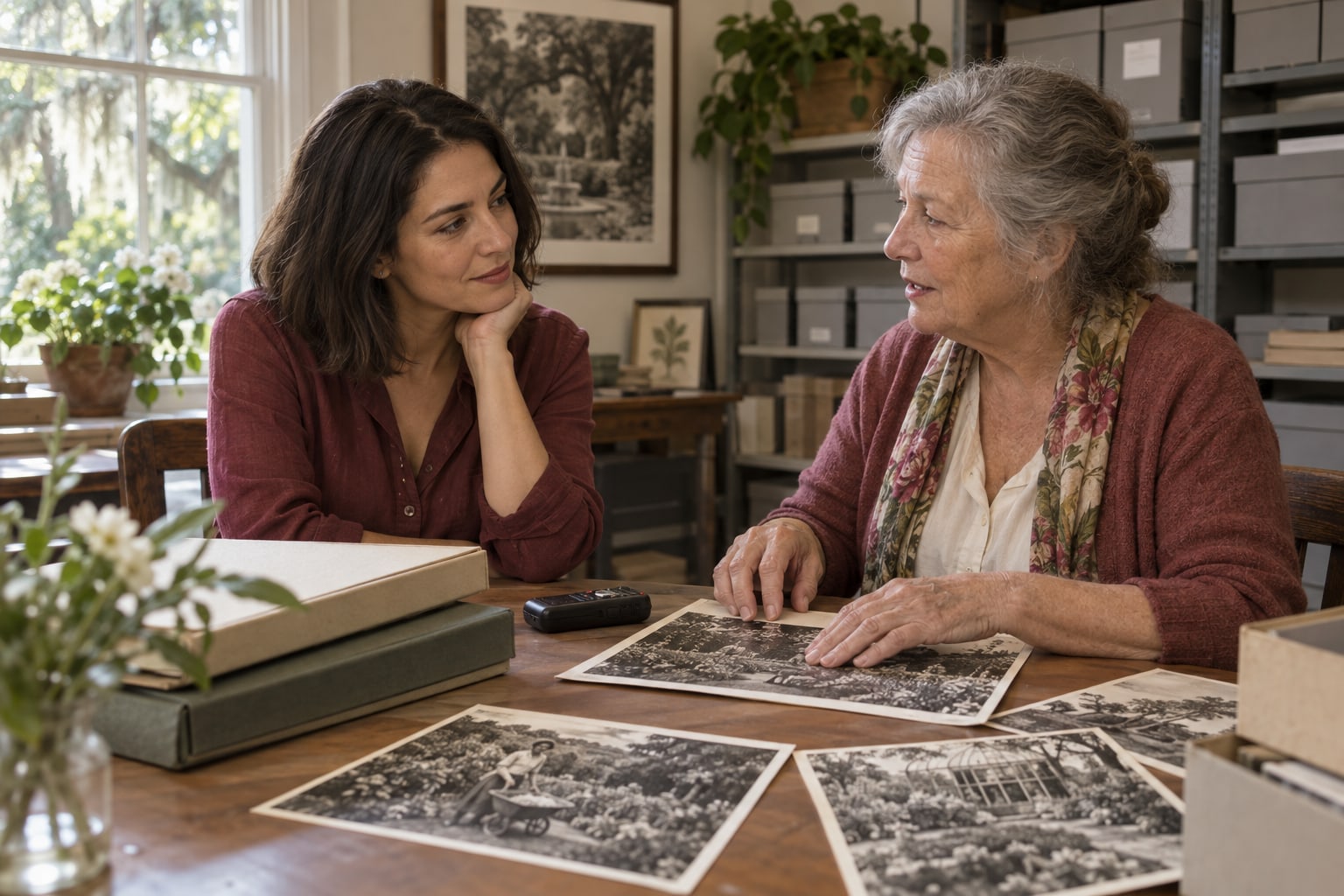
At ten, Evelyn brought in Mrs. Bell, who had chaired the first garden committee and regarded thirty years of institutional memory as a personal responsibility.
“Nobody remembers that the original gate was blue,” Mrs. Bell announced.
“Was it?” Lena asked.
“Terrible blue. Like an unhappy swimming pool.”
For forty minutes, Lena recorded the story of five neighbors, a vacant lot, and a grant application completed on a typewriter whose letter E required special encouragement. Mrs. Bell's husband had built the first benches. He had died the winter before they installed them.
“Do you want his name beside the bench photograph?” Lena asked.
Mrs. Bell considered. “Put both our names. I held the boards.”
Afterward, Lena stood alone with her hand resting on the recorder. Her father had died two years earlier. People remembered that he had repaired clocks and raised a daughter who left town. They rarely remembered that her mother kept the shop's books, negotiated the rent, and learned to distinguish the sound of a broken spring from the sound of a merely stubborn one.
Put both our names. I held the boards.
She wrote the sentence on a card and pinned it above her desk.
At lunchtime, Adam knocked on the open door. “Hazel bought too many sandwiches. That's her account of events.”
“Did she?”
“She bought three. There are three of us.”
“An elaborate error.”
“I can leave it here.”
Lena looked at the untouched coffee beside her scanner. “I'll come outside.”
They ate on the low wall near the magnolia. Hazel told a story about a client who wanted a low-maintenance garden filled entirely with plants that required constant attention. Lena described a museum visitor who had tried to turn off a video by unplugging a reproduction nineteenth-century telephone.
Adam laughed into his sandwich. For a moment she remembered how easy lunch could be with him. Then Hazel's phone rang, and she walked toward the gate, leaving the dangerous space of an ordinary afternoon between them.
“What do you have?” Lena asked.
Adam set his sandwich down. “Something you sent me.”
The garden seemed suddenly too bright.
“A photograph?”
“A letter.”
She placed her napkin carefully beside her knee. There had been birthday cards, silly postcards from college visits, notes passed through friends. But he would not have written that email about those.
“Which letter?”
“The one from the week you left.”
She looked toward the gate. Hazel was standing beyond it, speaking with one hand cupped over her ear.
“I need to go back inside,” Lena said.
“Lena—”
“Don't follow me.”
He stayed seated.
Inside, she shut the door and stood with both palms against the desk. For eighteen years, she had believed the letter never arrived. Not because Adam had told her so. Because believing it had arrived required imagining him reading every word and choosing silence.
She had written it after their last argument, when he said he could not leave Savannah and she heard that he would not try. Her scholarship in Chicago was waiting. His father had suffered a stroke. Everything had become urgent and impossible, and neither of them had known how to separate love from obligation.
The letter had been her final effort to do better. She remembered the blue stationery. She remembered asking him to meet her before her train. Not to leave his father. To talk. To decide together whether there was a way through.
No one had come.
Her phone buzzed. Adam's message contained no explanation.
I owe you a direct answer. I can bring it tomorrow, or whenever you choose. You don't need to make this easier for me.
She put the phone facedown and finished scanning forty photographs. The work steadied her without excusing anyone.
At five, Marisol found her labeling folders with unnecessary precision.
“I brought the proof paper.” She paused. “What happened?”
Lena told her. The whole story took less time aloud than it had occupied in her life.
Marisol sat on the edge of the table. “Do you want me to be furious first, or practical?”
“Furious.”
“Good. That's available.”
Lena laughed once, without pleasure. “I don't want him to tell me he kept it because I mattered.”
“Then tell him that.”
“What if hearing it makes everything worse?”
“Knowing might hurt. Guessing has been hurting for eighteen years.”
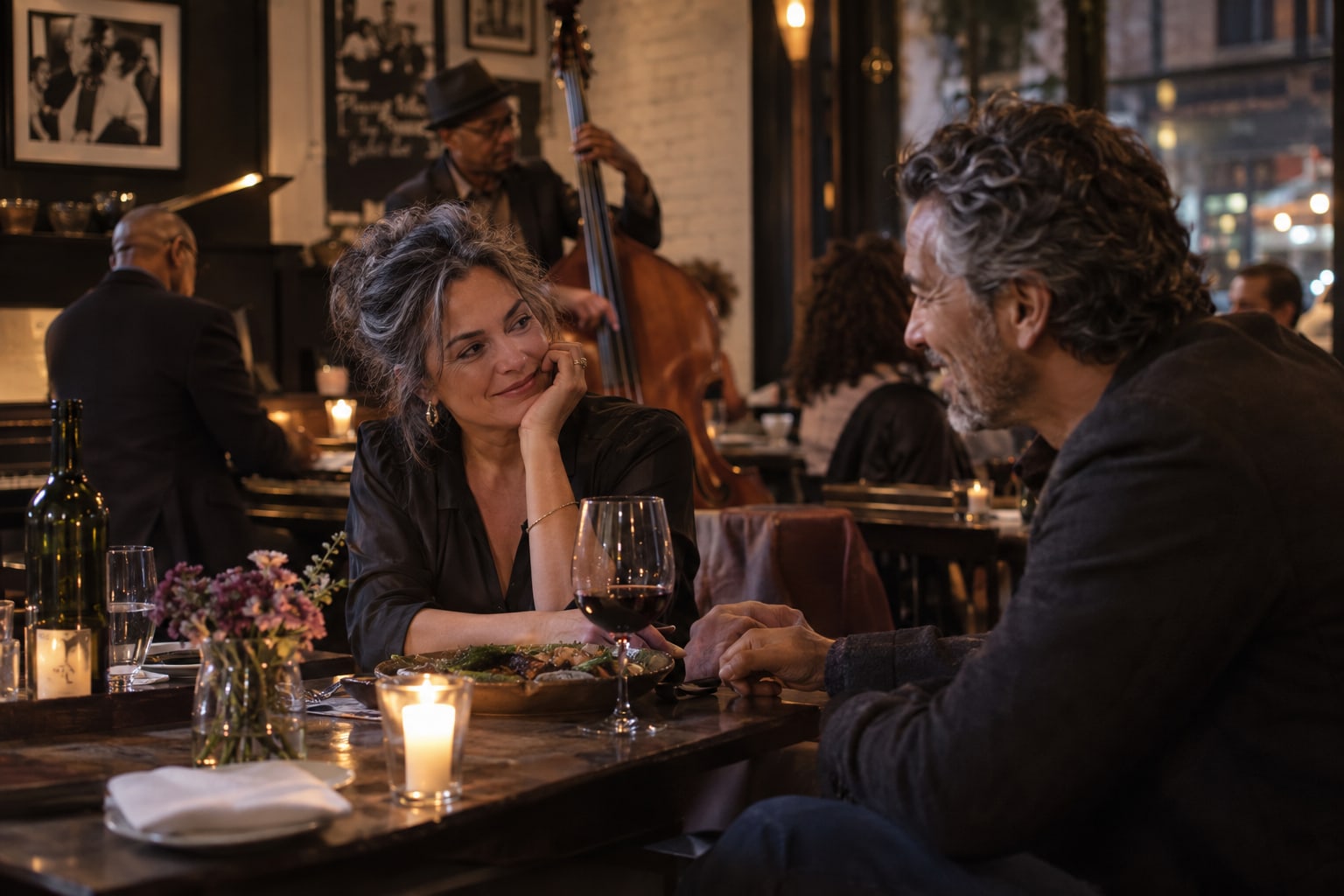
They carried the scanned files upstairs to the apartment, then walked two blocks for soup even though the evening was too warm for it. Marisol did not prescribe forgiveness. She complained about the restaurant's slippery spoons and made Lena order bread.
“I used to think answers made you calm,” Lena said.
“Sometimes they just give you the right thing to be angry about.”
Across the table, Marisol broke the bread with both hands and put the larger piece on Lena's plate. They had eaten in this restaurant after Lena's father's funeral. The same window faced the same brick wall. She found comfort in the fact that a place could hold more than one terrible day and still be somewhere you chose to come.
Back home, Lena wrote a message before she could make it kinder than she intended.
Tomorrow, nine. The conservatory. Bring the letter. I want to know when it arrived, and I want the truth before anything else.
The response came while she was still holding the phone.
It arrived the day before you left. I'll be there at nine.