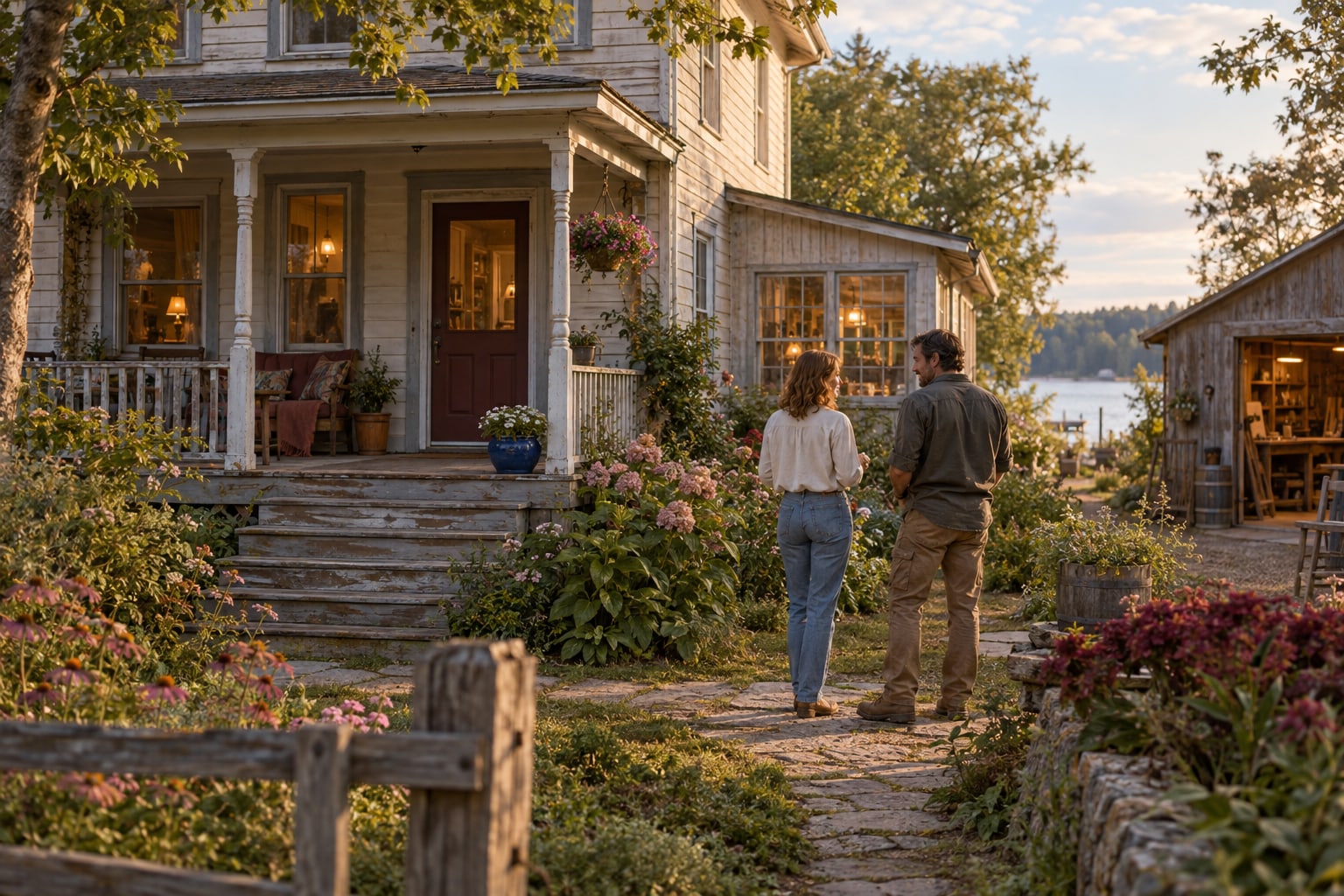
The clock shop smelled of wood oil even with every clock stopped. Lena stood in the doorway and waited for the sound her father used to make when a customer entered, a thoughtful little hum that meant he would finish what he was doing before he looked up.
Nothing came.
Ruth handed her a ring of keys. “The cabinet doors are unlocked. I thought you should see inside.”
Adam arrived carrying moving blankets and a hand truck. He greeted Ruth with warmth that did not assume intimacy, then looked to Lena for instructions.
“The tall cabinet goes to Marisol's shop,” she said. “She's lending me the back room for materials.”
“We'll measure the stairs first.”
“There aren't stairs.”
“Even better. I enjoy a project that improves immediately.”
Ruth smiled. Lena wanted to warn her not to attach meaning to it, but her mother was already opening a box of packing paper.
They worked for an hour. Adam wrapped the shelves while Lena sorted their contents: brass weights, glass domes, tiny envelopes of screws. Her father had saved objects other people considered too small to justify the trouble. A drawer contained twenty-seven watch faces and one photograph of Lena at college graduation, the corners softened from handling.
She sat on the stool behind the counter.
Adam glanced over. “Do you want me to keep going?”
“Please.”
He returned to the shelves. She was grateful not to become the room's main event.
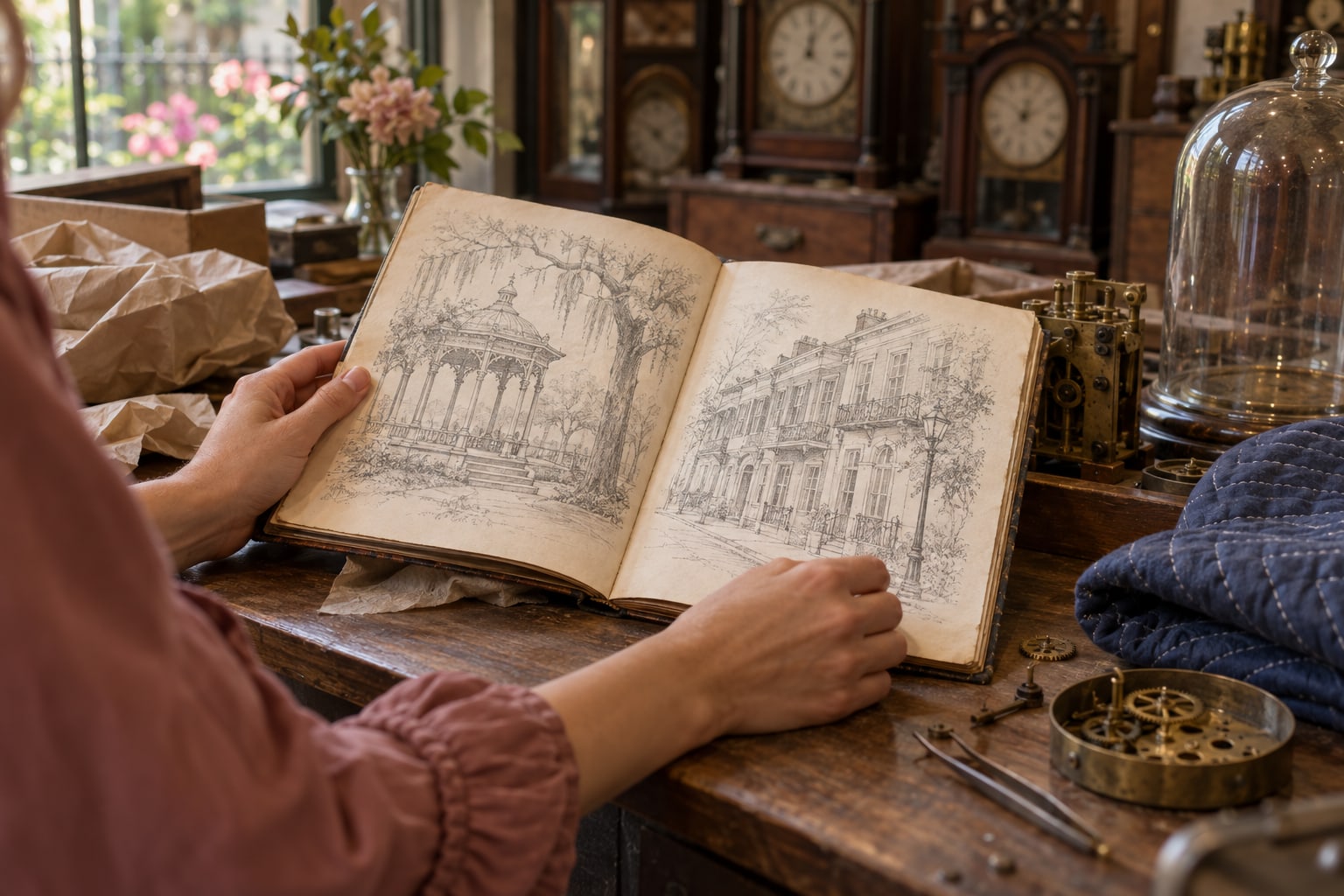
In the bottom drawer she found a sketchbook. At first she assumed it was hers, left behind years ago. Then she saw her father's name and a date from before she was born.
The drawings were buildings. Narrow houses with interior courtyards. A public library whose steps became seating. A market hall full of light. On one page, a garden wrapped around a school like an open hand.
“Mama.”
Ruth looked up from a stack of receipts.
“Did Dad want to be an architect?”
Her mother put the receipts down. “For a while.”
“He never told me.”
“He liked drawing. Then his father got sick, and there was the shop. Later there was you.”
Lena felt the words strike in their usual order: duty, work, child. Reasons a life could narrow until everybody called it contentment.
“He was happy,” Ruth said, reading her face.
“Could he have been happy and still wanted this?”
Her mother looked toward the sketchbook. “Yes. I suppose he could.”
Adam said nothing. He eased a shelf into its blanket with careful hands.
At noon, Ruth went to meet the buyer at a nearby cafe. Lena remained behind the counter, turning pages. Adam sat on the other stool, leaving the space between them clear.
“Did you know?” she asked.
“That he drew buildings? He showed me one, years ago.”
“Why you?”
The sharpness surprised them both.
“I was considering landscape architecture. He said I should find out what the work actually felt like before I made a whole life around the idea of it.”
Lena stared at a courtyard filled with pencil trees. “Everybody knew some part of him I didn't.”
“You knew parts nobody else did.”
“That doesn't feel fair either.”
“No.”
She closed the book. “I miss him, and I'm angry with him. He told me to go everywhere. He never mentioned what staying had cost.”
Adam rubbed his thumb along the stool's worn edge. “Maybe he didn't know how to tell you without making you feel responsible.”
“People spend a lot of time protecting women from information that might let us make choices.”
He looked at her. “Yes.”
“I wasn't inviting you to confess again.”
“I know. I was agreeing.”
She let her shoulders lower.
They ate sandwiches on the back step, where a strip of shade barely covered their shoes. Adam told her his father now lived in an accessible apartment near Beth. Richard could be impatient and proud, but he had learned to ask for help. Adam was still learning to believe asking and receiving were different from arranging everybody else's life.
“Are you happy?” Lena asked.
He considered long enough that she trusted the answer before hearing it.
“Often. My work matters to me. I have friends. Beth's kids think I can fix anything, which is becoming an expensive misunderstanding.”
“That's not all of it.”
“No. I stayed in one place so completely that eventually I stopped asking whether I was choosing it.”
She looked at him across the paper bag. “I left so completely that coming back began to feel like losing.”
“Does it still?”
“Sometimes.”
The admission settled between them. He did not try to turn it into an invitation.
Before they moved the cabinet, Lena went back inside alone. She opened her father's sketchbook to the school garden and photographed the page. Then she called her mother.
“Could we keep this together?” she asked. “I'd like to borrow it, but I don't want borrowing to become taking.”
Ruth was quiet for a moment. “Thank you for asking.”
“Maybe you can tell me about the drawings sometime.”
“I'd like that.” Her mother's voice warmed. “He was terrible at drawing people. All those beautiful buildings full of potatoes wearing hats.”
Lena looked again and laughed through the sudden sting in her eyes.
After lunch, they moved the cabinet. It took planning, a borrowed furniture dolly, and a good deal of respectful swearing. At Marisol's shop, Lena guided the feet over the threshold while Adam steadied the upper corner.
“Left,” she said.
“Mine or yours?”
“The cabinet's. It has strong views.”
He laughed. She did too, breathless with effort. When the cabinet finally stood against the wall, they stepped back together, sweaty and pleased in a way that needed no history.
Adam folded the blankets. “Company afterward, or just the cabinet?”
She remembered his message. “Just the cabinet today.”
“All right.”
At the door, she stopped him. “Thank you for doing exactly what I asked.”
His face changed, a quiet hurt she did not feel obliged to soothe. “You're welcome.”
That evening, Marisol returned to find Lena arranging her father's tools beside samples for the garden exhibition. She admired the cabinet, then the sketchbook, then sat beside Lena on the floor.
“You look like you've moved something heavier than furniture.”
“I found out Dad had an entire person inside him.”
“Parents are sneaky that way.”
Lena leaned against the cabinet. “I don't want anybody I love to become my reason for not trying.”
“Then make that a rule.”
“Rules don't make people stay.”
Marisol rested her head briefly against Lena's shoulder. “Neither does disappearing inside what they need.”
Later, Lena opened the Seattle application and uploaded the portfolio she had been revising for months. Under the question about artistic purpose, she wrote about her father's unbuilt courtyards. Then she deleted his name and wrote the sentence again in her own voice.
I want to make places where people can belong without having to become smaller.
She pressed submit before she could ask anyone whether it was sensible.